Introduction
Let’s be honest designing a home is fun right up until you actually sit down and add up the numbers. Modular kitchen. Wardrobes. Furniture. Lighting. False ceiling. And suddenly that “dream home” folder on your phone starts to feel… a lot less realistic.
But here’s the thing. It doesn’t have to go that way.
With decent planning, and the right people around the table, you can end up with a home that looks genuinely good and actually works for how you live without wiping out your savings to get there. That’s really the whole point of finding affordable interior designers in Pune who know what they’re doing. Not just someone who can make a room look nice for a photo. Someone who asks how you’ll actually use the space, figures out what matters most to you, and builds the design around that. Style, function, cost all three. Not just one.
What “Affordable” Actually Means
Quick myth to bust, right off the bat: affordable doesn’t mean cheapest.
In this line of work, the lowest quote often ends up costing the most in the end. Hinges that snap within a year. Materials that need constant babying. Furniture that clearly was never measured against the actual room it’s sitting in. You’ve probably seen this happen to someone maybe even yourself.
Think of it less as “spend less” and more as “spend smart.” A kitchen you cook in every single day? That deserves good hardware. A guest room you use twice a year? Doesn’t need the same treatment at all. Wardrobes and storage matter because your hands are on them constantly. Decorative extras those can stay simple, and honestly nobody will notice.
The goal, really, is just this: every rupee should be doing something.
Planning Your Budget the Right Way
Good budgeting isn’t one big number. It’s how that number gets carved up.
Set a Realistic Budget First
Before you fall in love with a fabric swatch or a paint chip get honest about the total. Then figure out where it should actually go.
Some families are kitchen-first, no question. Others need serious storage. If you work from home, maybe a proper desk matters more to you than a feature wall, and that’s completely fine too. None of these priorities are “wrong.” They’re just yours, and your designer needs to hear them before anything gets drawn up.
Sort this out early and you’ll dodge the expensive mid-project changes that quietly wreck most budgets. Ask anyone who’s renovated before. That’s usually where the overspending actually happens not in the plan, in the changes to the plan.
Plan the Layout Before You Plan the Look
Here’s a mistake almost everyone makes, without even realizing it: picking furniture and finishes before the layout is nailed down.
Layout comes first. Full stop. Furniture needs breathing room. Doors, windows, switchboards all of it has to be accounted for. Storage needs to live where you’ll actually reach for it, not just wherever there happens to be a free wall.
Get this part right and even a small Pune flat can feel roomy genuinely. And honestly, this is where an experienced designer earns their fee. They’re seeing the whole home as one connected system, not five separate rooms stitched together.
Design Strategies for a Budget-Friendly Home
Making Small Homes Feel Bigger
Most people in Pune are working with apartments, and every square foot matters more than they’d like it to.
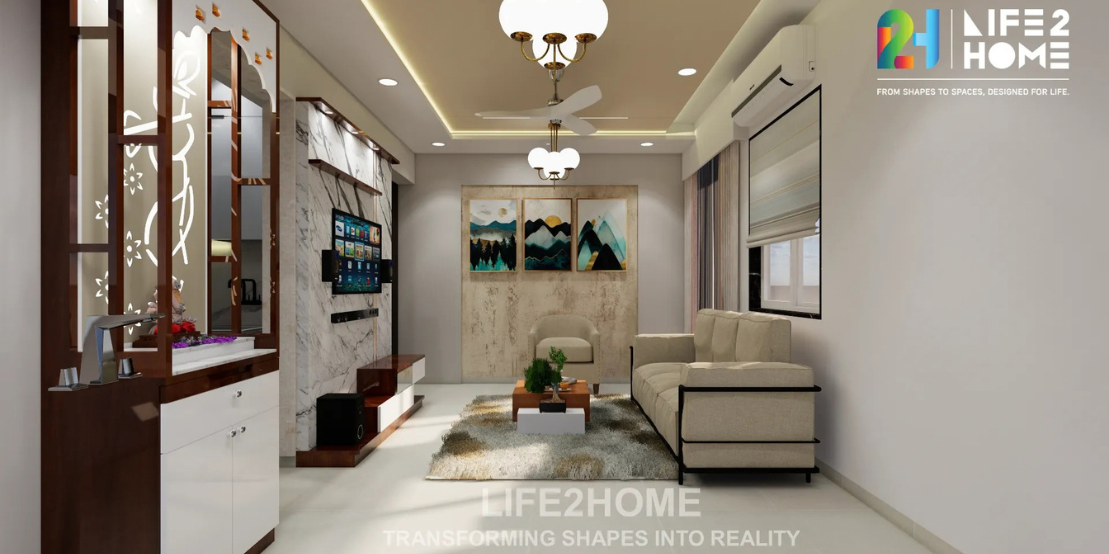
Full-height wardrobes use wall space that would otherwise just sit empty. Wall-mounted TV units get rid of bulky floor furniture. Beds with storage underneath mean one less cabinet you have to buy.
But don’t overdo it. Filling every corner just because you technically can usually backfires. A little open floor space is what makes a small room feel calm instead of crowded.
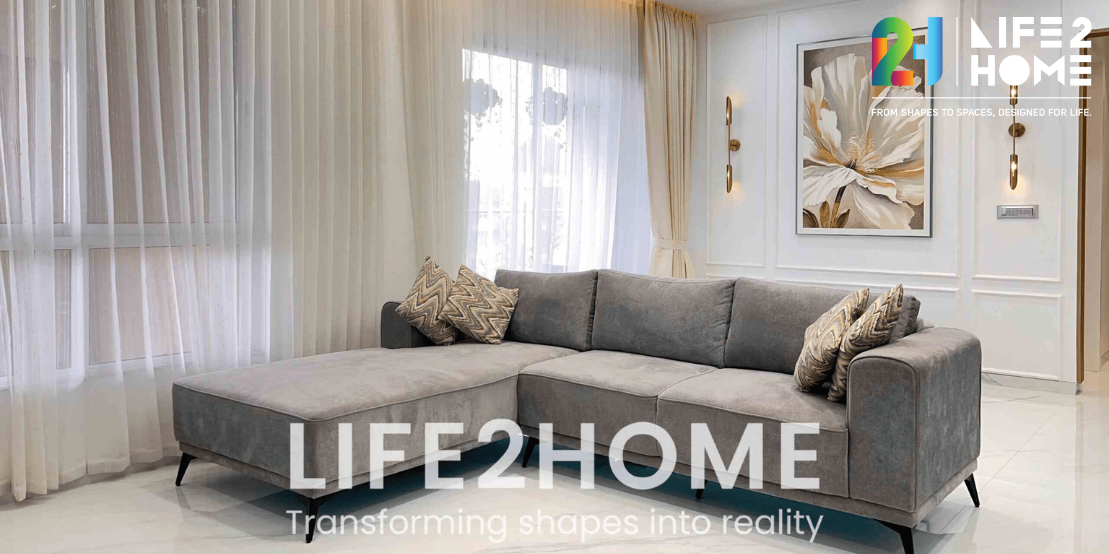
Lighter colors help too. Warm white, soft beige, a pale grey pick a clean base, and bring in personality through cushions, art, whatever you like. Those are cheap to change later. A wall color you’re sick of? Not so much.
Where to Actually Spend in the Kitchen
For most families, the kitchen is where the budget conversation gets real and it’s also where good design shows up most in everyday life.
Design around how you actually cook. Fridge, sink, prep zone, all within easy reach of each other. Frequently used items somewhere you don’t have to think twice about.
Modular kitchens come with a huge menu of extras pull-outs, corner units, tall storage, soft-close everything. You don’t need all of it, honestly. If a feature isn’t solving a real problem for you, skip it. Put that money somewhere you’ll actually feel it.
Choose Kitchen Materials for Durability, Not Just Looks
Kitchens take a beating. Heat, moisture, constant wiping down. Hinges and drawer channels deal with wear that a decorative finish never has to.
Where to Spend on Hardware
This is the part that gets used every single day, so this is where the money should go solid channels, reliable hinges, a carcass that’ll actually hold up over time.
Where You Can Save on Finish
The outer finish, on the other hand, is where you can hold back a bit. A well-chosen laminate under decent lighting looks just as sharp as something several times the price.
Build Storage Into the Design, Not Around It
Skimp on storage and a home fills up fast. Clothes, papers, everyday clutter all fighting for the same three surfaces.
Storage works best when it’s planned from day one, not squeezed in as an afterthought. A full-height wardrobe uses wall space better than a standard one. A TV unit with hidden cabinets pulls double duty. Even a small shoe rack near the door keeps the rest of the house tidier than you’d expect.
And tailor it to how you actually live. Someone with a lot of hanging clothes needs a different setup than someone who mostly wants drawers and shelves. The goal isn’t the most cabinets possible it’s just enough that things stay organized without the room feeling boxed in.
Simple Materials, Used Well, Look Expensive
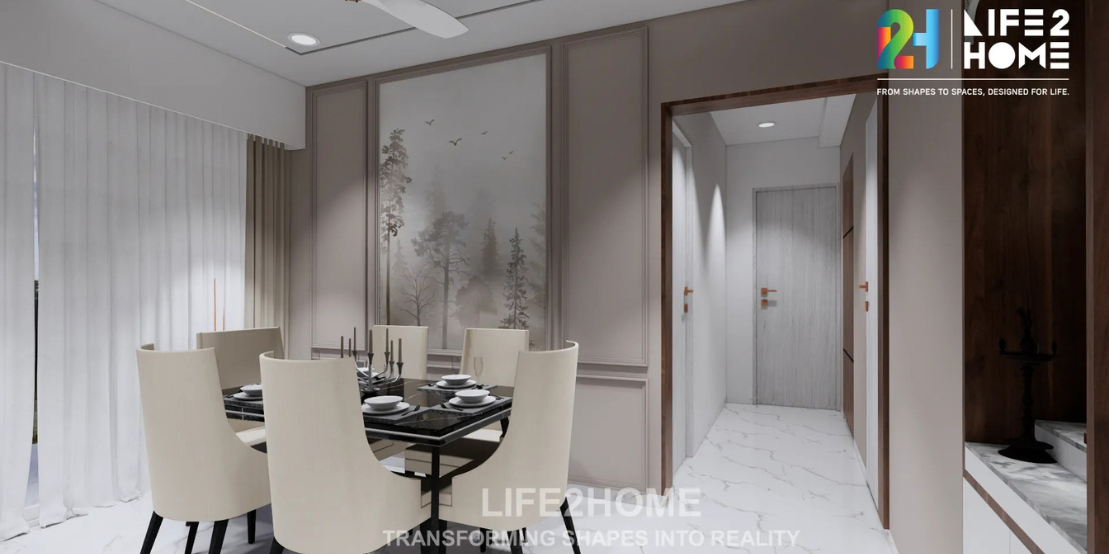
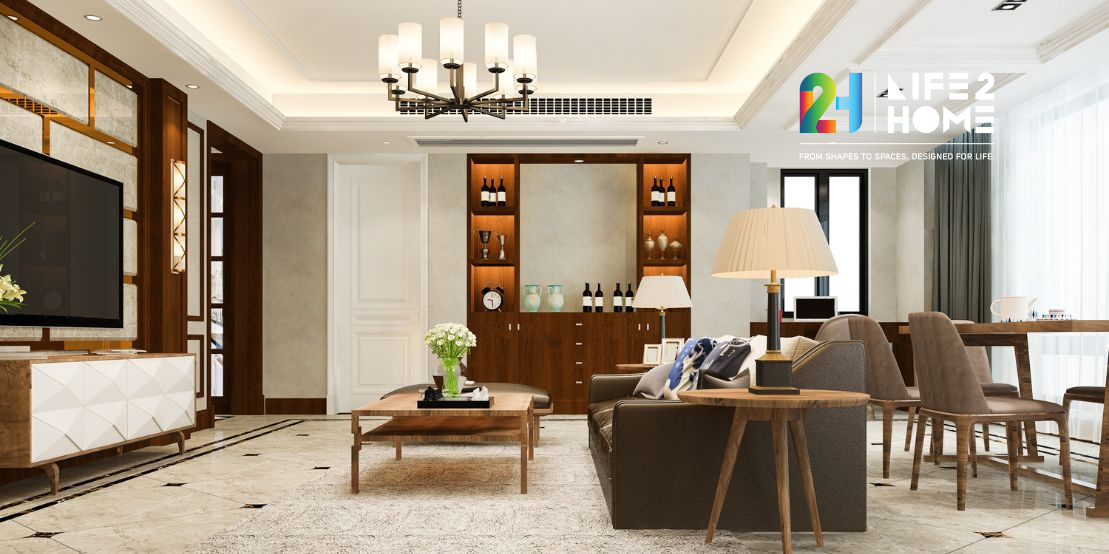
You don’t need premium finishes everywhere to get a premium feel. Consistency does most of the heavy lifting here neutral tones, clean lines, wood finishes that actually match each other for once.
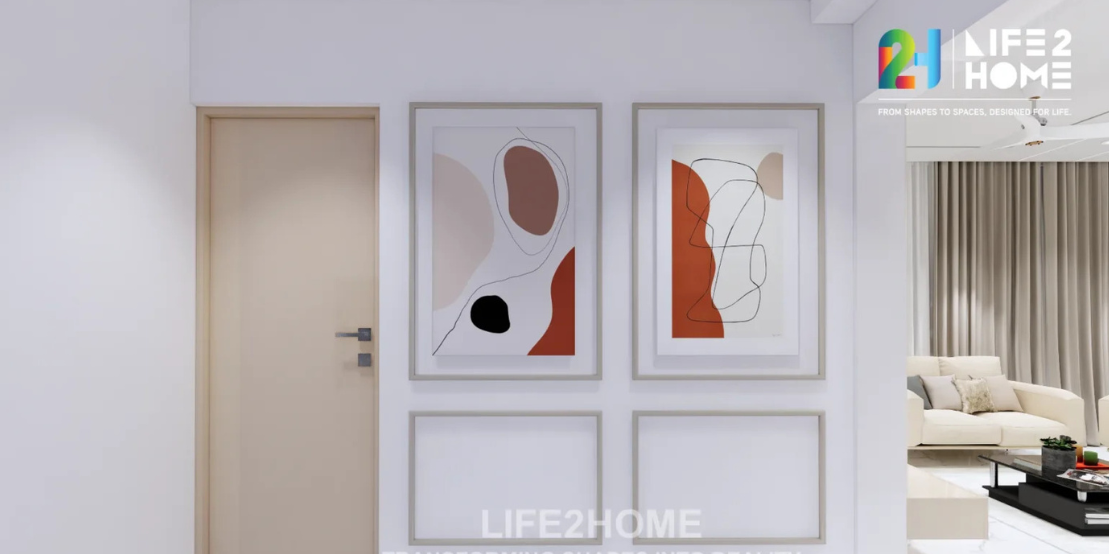
Pick one strong focal point instead of spreading the budget thin across the whole room. A textured wall. A striking light fixture. One good piece of art. Let everything else stay quiet around it.
Honestly? This is one of the easiest ways to make a room feel intentional instead of just expensive.
Lighting Changes a Room More Than People Expect
Lighting is usually the first thing to get cut when money’s tight, which is a shame because it’s genuinely one of the cheapest ways to make a room look finished.
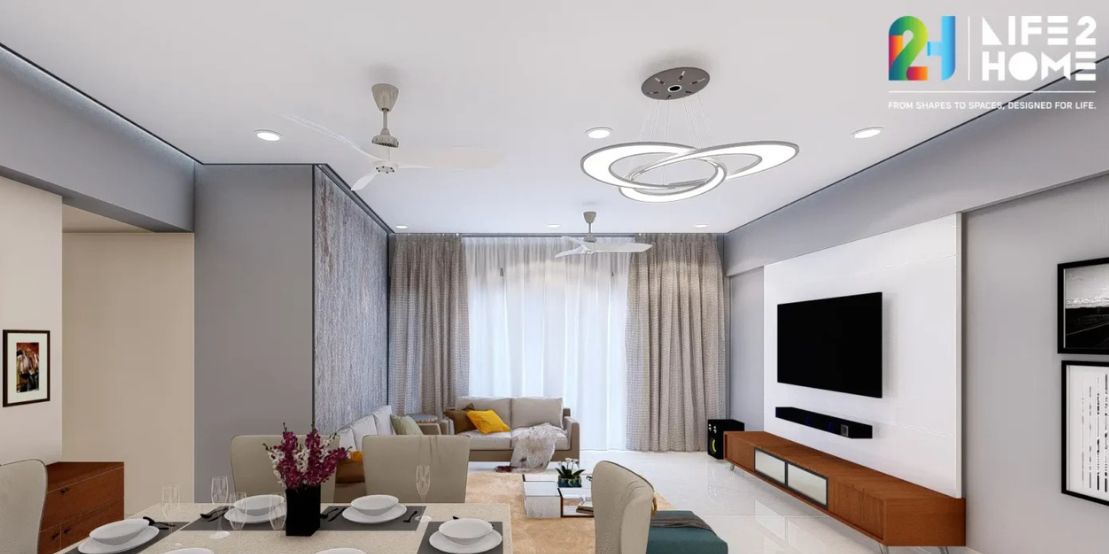
Living rooms want a mix of general and accent lighting. Bedrooms need something warmer, softer. Kitchens need real task lighting over the counters one bulb in the middle of the ceiling just won’t cut it, no matter how bright.
Don’t ignore natural light either. Keep furniture away from windows. Pick curtains that let daylight in but still give you privacy when you actually want it. Good lighting is mostly about placement and layering. Not the price tag on the box.
Don’t Chase Every Trend
Trends are tempting, especially after a weekend of scrolling design reels at midnight. But they move fast, and the big, expensive, hard-to-change stuff cabinets, wardrobes, flooring shouldn’t be picked around whatever happens to be trending this year.
Keep those bones timeless. Bring the trends in through the small, swappable stuff instead cushions, rugs, art, curtains. Things you can change in an afternoon whenever you feel like a refresh, without ever touching the renovation budget again.
Where Quality Should Never Be Compromised
Quality Still Matters, Even on a Budget
Being careful with money isn’t the same thing as cutting corners everywhere. Some parts of a home get touched constantly, and they simply need to hold up hinges, wardrobe fittings, drawer channels, wiring, the furniture you use every day.
Save by simplifying elsewhere. Not by weakening the stuff that gets used fifty times a day. A good laminate instead of a premium finish? Smart trade, honestly. Cheap hinges on a wardrobe you open twice daily? Not smart. Not even close.
Compare Designers on Value, Not Just Price
It’s tempting to just go with whoever quotes the lowest number. But two wildly different quotes are usually covering two wildly different scopes of work that’s just how it goes.
Before deciding, get specific. What materials? What hardware? What’s actually covered under electrical work and installation? What happens if you change your mind halfway through the project? Look at past work. Ask how they’ve handled delays for other clients, because delays will happen, at least a little they always do.
The right affordable designer isn’t the cheapest name on the list. It’s the one whose price actually matches what you’re getting for it.
Real Interior Design Costs in Pune
Pricing for full home interiors in Pune shifts a lot depending on home size, materials, and how customized the design ends up being. A 1 BHK, 2 BHK, and 3 BHK will naturally land in different ranges, and bespoke or luxury interiors will always run higher than a standard package.
Because that range is genuinely wide, the smartest move isn’t chasing a ballpark figure online it’s getting a detailed, itemized quote upfront. That’s really the only thing that protects you from surprises further down the line.
Why Consider a Turnkey Solution
Trying to coordinate a carpenter, electrician, plumber, and painter all on your own? It’s a lot, honestly. And it’s usually where projects run over budget and past deadline not because anyone did bad work, but because nobody was actually talking to each other.
A turnkey interior service puts design, materials, and execution under one roof. One team. One point of contact. One plan everyone’s actually working from. That alone cuts down on the miscommunication that quietly drives costs up over time.
Life2home offers home interiors, modular kitchens, customized furniture, lighting, and full turnkey solutions with a clear scope of work laid out before anything even starts.
Luxury Is a Design Choice, Not a Price Tag
A lot of what reads as “premium” in a home really has nothing to do with how much was spent on it. It’s proportion. It’s lighting. It’s whether the little details were actually thought through or just left to chance.
A custom wardrobe that fits the room exactly will always beat an expensive off-the-shelf one that just doesn’t sit right. Coordinated colors, hidden storage, layered lighting these create a refined feel without needing a luxury-sized budget behind them at all.
Spend carefully on the handful of things that truly matter. Let consistency handle the rest.
How Life2home Approaches Affordable Interior Design
We’ve been doing this a while, and it shows in how we build around transparent, budget-conscious planning, not compromise. Every project comes with clear, itemized pricing, quality materials, on-time delivery, and maintenance support after handover, because the value shouldn’t stop the day the project wraps up. It shouldn’t stop there at all, really.
Whether you’re working with a 1 BHK, 2 BHK, or 3 BHK, our team plans every last detail layout, materials, lighting so the whole process feels manageable, and the result actually feels like yours.
Conclusion
An affordable home isn’t a compromised one. It just means knowing where to spend, where to hold back, and who to trust with the difference between the two.
Set a realistic budget. Plan the layout before the look. Put your money into what gets used every day, and keep the trend-driven stuff small and easy to swap out later. Do that, and honestly, the home ends up looking a lot more expensive than it actually was.
That’s really the whole idea behind working with affordable interior designers in Pune a home that feels considered, comfortable, and completely yours, at a price that still makes sense a year from now. Maybe longer.
FAQs
1. Is affordable interior design in Pune actually good quality?
Yes, generally. Affordable design is about smart planning and material choices, not cutting corners. A good designer helps you get the most out of your budget rather than compromising on quality where it actually matters.
2. How much does interior design cost for a 2 BHK flat in Pune?
It depends a lot on materials and how much customization you’re after, so pricing really does vary from project to project. The most reliable way to know your actual number is to get a detailed, itemized quote not to go off a rough figure someone quoted online.
3. How can I reduce my interior design budget without sacrificing style?
Spend on high-use areas first. Choose modular over fully custom furniture. Keep false ceiling work minimal. And get a fixed, itemized quote before you start anything.
4. What’s included in a standard interior design package?
Usually design planning, material selection, modular furniture, basic false ceiling and lighting design, and execution management. Always confirm the specifics with your designer before signing off, though packages do vary.
5. How long does a home interior design project take in Pune?
It depends on the scope, but a full home interior usually takes a few months from design finalization to handover modular work and a well-coordinated execution team tend to keep this on track. Delays most often come from mid-project changes, so locking in the design early helps keep the timeline realistic.