Have you ever pulled up the charger for your smartphone and thought about where cables are coming from? One charger can be three. After that, headphones for smartwatches, laptop chargers power banks for tablets, tablet adapters headphones, extension boards. Sooner or later your room will be getting dirty. It is commonplace in every house. Modern families use multiple devices every day. We charge phones at night, laptops at work, tablets for our children, and smartwatches before bedtime. The issue isn’t with the devices. The issue is finding a suitable location to charge the gadgets. Smart charging stations can make a big difference. Instead of hanging wires everywhere, they can be hidden them well and keep everything easily accessible. A lot of homeowners today ask Interior Designers near you to design charging solutions that are compatible with contemporary interiors. The great thing is the fact that it doesn’t require an enormous overhaul to arrange your charging area. Let’s examine some practical suggestions that are perfect for Indian homes.
Why Hidden Charging Stations Are Becoming Popular
Technology is a fact of our daily lives. From early morning alarms to late night streams, these devices remain on our phones all day long. Naturally, they need regular power supply. If you don’t plan your activities properly, you could notice:
- Wires spread across tables
- Charging sockets hang over the chargers
- Extension boards that are lying on the floor
- Dust accumulating on cables
- Limited plug points
An under-the-radar charging station helps keep everything in order while enhancing the overall look of your house.
Create a Charging Drawer in the Living Room
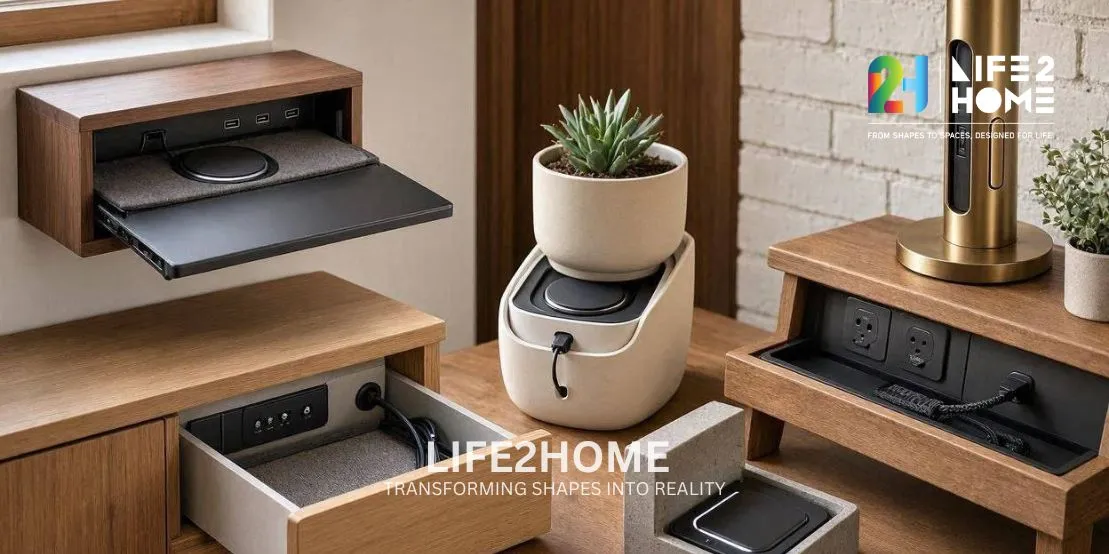
One of the most simple ways to do this is by using the drawer. Instead of putting chargers on the table, create a drawer for charging needs of all kinds. In the drawer, you’ll be able to install:
- Multiple sockets
- USB charging ports
- Cable organisers
- Small dividers
This enables phones, tablets and earbuds charge without being in the view. The living room instantly appears more tidy.
Add a Charging Shelf Near the Entrance
A lot of people put their phones or wallet along with keys at the entryway after returning home. Why you don’t charge your phone at the same time also? A floating shelf and hidden outlets behind it creates a charging corner that is simple. It is suitable for:
- Mobile phones
- Smartwatches
- Earbuds
Everything is in one place when you go home the next day.
Hide Chargers Inside Bedside Tables
Bedrooms are often charged zones. The majority of people recharge their phones throughout the night. Instead of hanging cables on the bedside table, you can modify the table beside your bed. Include:
- Internal sockets
- Cable holes
- Hidden compartments
This helps keep the table tidy while making charging easy. There are many interior designers near Me advocate this option since it blends functionality and an attractive design.
Build Charging Points Inside Kitchen Drawers
The kitchen has a wealth of gadgets that are smart. You could charge regularly:
- Bluetooth speakers
- Smart weight scales with weighing sensors
- Tablets
- Portable mixers
A drawer that has concealed sockets helps keep these appliances in order and doesn’t alter the look of your kitchen. Also, it protects chargers from splashes of water.
Include Charging Stations in Study Units
Work-from-home settings continue to expand. Study tables can be overflowing with laptops, chargers and wires. A hidden compartment for charging inside the desk can help you organize everything. Some useful additions include:
- Cable tray
- USB ports
- Power strips
- Space for charging laptops
This helps create a more tidy workplace and helps reduce distractions.
Use Cable Management Boxes
Sometimes the most basic solution is perfect. Cable management boxes cover extension boards and keep them easily accessible. They aid in the organisation of:
- Adapters
- Power strips
- Loose wires
They also enhance security, particularly in households with pets or children.
Add Charging Stations Inside Wardrobes
This concept is not well-known to homeowners. The shelves in the wardrobe can be charged to help:
- Smartwatches
- Trimmers
- Electric toothbrushes
- Tablets
The hidden charging compartments in wardrobes keep personal devices safe and organized. It also reduces the visible clutter in the bedroom.
Convert a Cabinet Into a Family Charging Hub
Instead of charging devices all over the house, set up a Central charging station. A small cabinet is ideal. Every family member is entitled to one section. Include labels for:
- Parents
- Children
- Guests
This simple organization helps to avoid confusion and lost chargers. In reality, it can help you save time every day.
Use Pop-Up Power Sockets
Pop-up sockets are concealed within furniture or countertops until they are needed. After being pressurized, they rise off the surface. They are helpful to:
- Home offices
- Kitchen islands
- Dining areas
When the battery is charged, it fades and is reinserted into the surface leaving everything clean.
Hide Charging Points Behind Decorative Panels
Wall panels don’t have to be ornamental. They also can hide electrical outlets. Wooden slats and decorative boards can hide sockets, while allowing the ability to access them whenever needed. This design idea is especially effective in living rooms.
Install Charging Units Inside TV Cabinets
Entertainment units currently house televisions as well as gaming consoles, speakers and routers. The hidden charging points in the cabinet can result in a better and more tidy configuration. You may be charged:
- Game controllers
- Remote batteries
- Wireless headphones
- Portable speakers
Everything is organised in a closed shutter.
Add USB Charging to Bed Headboards
Modern headboards can include built-in charging points. This lets you charge your phone with no cables extending across the space. Many homeowners like this feature since it keeps bedsides clear of clutter. Little details like this can greatly improve the everyday experience.
Use Multi-Purpose Furniture
Furniture is more than just provide seating. Modern alternatives include:
- Coffee tables that have charging drawers
- Side tables that have hidden sockets
- Storage benches that have charging ports
- Console tables with hidden wiring
These pieces are functional and fashion elegantly.
Plan Charging During Interior Design
Many homeowners consider charging points once the interiors are completed. At this point the time you change electrical layouts, it becomes more costly. It is best to anticipate charging requirements at the design phase. Take a look at:
- The number of family members
- Use of devices on a daily basis
- Future gadgets
- Furniture arrangement
A well-planned plan can prevent the need for extensions later on. Many people seek out Interior Designers near You specifically to design organized electrical layouts that can be used to support the modern lifestyle.
Don’t Ignore Ventilation
Chargers generate heat. Cabinets enclosed in cabinets must have the proper ventilation. The small ventilation gaps or the subtle openings allow for better airflow and protect electronic devices. Always put safety first before appearance.
Label Charging Cables
This may sound simple however it can save you a lot of stress. If several chargers are connected it is difficult to determine which is connected to what device. Small cable labels can solve the issue immediately. Every family member knows the charger they should make use of.
Keep Frequently Used Devices Easy to Access
Hidden doesn’t mean inconvenient. Everyday devices must be easy to access. For instance:
- Phone chargers near beds
- Laptop chargers in the vicinity of workstations
- The charging of tablets is common in classrooms.
Good design balances style and practicality.
Think About Future Technology
The homes continue to change. In five years’ time the needs for charging could be quite different. Make sure you have extra sockets whenever possible. Incorporate other USB ports and a variety of storage. Future-ready planning can save you money on renovations later on.
Blend Charging Stations With Home Decor
Charging stations don’t need to be distinctive. The matching cabinet finishes with concealed handles, matching cabinet finishes, and hidden wiring make them blend in with other interiors. Most popular finish options include
- Matte white
- Walnut wood
- Grey laminates
- Beige textures
The final result looks more organized than being technical.
Common Mistakes to Avoid
Many homeowners make mistakes that cause problems. Beware of:
- There aren’t enough charging points
- Loose extension boards
- Cable bundles that are visible
- Poor ventilation
- Hard-to-reach sockets
A bit of planning can avoid these issues completely.
Hidden Charging Makes Everyday Life Easier
The greatest benefit isn’t only appearance. It’s about an ease of use. You know where each charger is. The house seems well-organized. Cleaning is easier since there are fewer wires that collect dust. It’s true that walking into an orderly space just makes you feel better. That’s why a lot of homeowners are asking Interior Designers near Me for clever storage and charging strategies when making plans for modern homes.
Conclusion
Technology has become a part of our lives However, wires that are visible need to be part of your decor. Hidden charging stations allow you to maintain the order of rooms, enhance security, and give more appealing appearance, without sacrificing comfort. If you decide to use charging drawers and closets, bedside units and furniture with integrated sockets, a thoughtful plan will have a dramatic impact in the daily activities. In Life2home We believe that great interior design is about making your home look beautiful and functional while being practical. From intelligent storage to custom charge solutions for your home, our staff designs spaces that meet contemporary lifestyles and demands.
Do you have a dream home that has a tidy interior?
Contact Life2home now. Our experts are able to help you design elegant, clutter-free areas with useful solutions to make living more pleasant and easier.
FAQs
The hidden charger is area in cabinets or furniture that allows electronic devices to charge without cables being in view.
You can put one in the bedside tables, study desks cabinets, kitchen drawers, TV units, wardrobes, table tops, and even living cabinetry for the room.
Yes. If properly installed with adequate ventilation and high-quality electrical fittings concealed charge stations can be safe to use for daily use.
Absolutely. Homes with smaller footprints benefit more since hidden charging options reduce the visible clutter and help to save space.
It’s not always the case. Furniture can often be improved by adding sockets, cable organizers as well as charging areas.
It’s possible to recharge smartphones, tablets and laptops. You can also charge smartwatches, laptops headphones, power banks cameras, and many other rechargeable devices.
Yes. Making them a priority during the design phase can help prevent the need for additional wiring extension boards, wires and renovation costs in the future.
A skilled interior designer can design furniture layouts, electrical layouts storage, as well as cable management. This makes for a cleaner safer, and more efficient house without affecting the overall design.